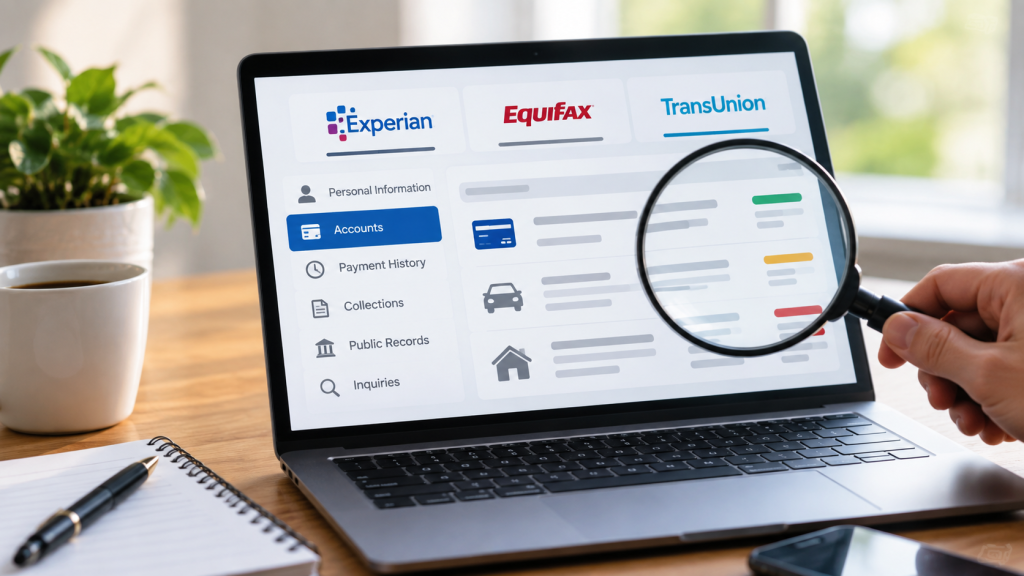
Most people have never heard of the Fair Credit Reporting Act, and that’s not because it’s obscure, it’s because no one teaches you that your credit report is a legal document, not a suggestion, not a scorecard, not a “best effort” system. I didn’t understand that either at first. I assumed errors were rare, that bureaus were careful, that lenders only reported what was true. Then I started seeing the same patterns repeat: dates that didn’t line up, balances that didn’t make sense, accounts that couldn’t be verified but kept showing up anyway. That’s when it clicked, errors aren’t exceptions, they’re a byproduct of scale. The FCRA exists because mistakes happen constantly, and without it, consumers would have no leverage. This isn’t theory or textbook law. This is the statute we rely on every day in real credit repair cases to force accuracy, accountability, and correction.
What Is the Fair Credit Reporting Act (FCRA)?
The Fair Credit Reporting Act (FCRA) is a federal law created to regulate how credit information is collected, reported, and corrected. It exists because credit reports are not casual summaries, they are legal documents that directly affect whether you can buy a home, finance a car, get a job, or even qualify for utilities. The FCRA applies to everyone involved in the credit ecosystem: credit bureaus like Equifax, Experian, and TransUnion; creditors who furnish data; and collection agencies that report or attempt to collect debts. Its core purpose is simple but powerful, to ensure that information reported about you is accurate, fair, timely, and verifiable. And if it’s not, the law gives you the right to challenge it. This matters to every consumer with a credit report because mistakes are common, systems are imperfect, and without the FCRA, you’d have no legal leverage to correct errors that can quietly cost you years of opportunity.
Who the FCRA Regulates (And Who It Doesn’t)
The Fair Credit Reporting Act doesn’t regulate people; it regulates systems of power that handle your financial identity. First, it governs credit bureaus like Equifax, Experian, and TransUnion, which are legally required to report accurate, complete, and verifiable information and to investigate disputes within strict timelines. Second, it regulates data furnishers, banks, lenders, credit card companies, auto lenders, and collection agencies. The entities that supply data to the bureaus and must be able to prove what they report. Third, it applies to employers and landlords, but only when they access credit reports for a permissible purpose and follow disclosure rules. What the FCRA does not regulate are private conversations, internal lender opinions, or debts that are never reported to the bureaus. In short: if an entity touches your credit report, feeds data into it, or uses it to make decisions about you, the FCRA is watching.
Your Core Rights Under the FCRA
Most people think credit reports are “opinions.” They’re not. Under the Fair Credit Reporting Act, your credit report is a regulated legal document, and you have specific, enforceable rights over what appears on it.
Here are the core rights the FCRA gives you:
- The right to accurate reporting – Credit bureaus and creditors are legally required to report information that is accurate, complete, and not misleading.
- The right to dispute inaccurate or unverifiable information – If something on your report is wrong, incomplete, outdated, or doesn’t belong to you, you have the right to formally challenge it.
- The right to an investigation within 30 days – Once a dispute is filed, credit bureaus must investigate the claim, usually within 30 days, and contact the data furnisher for verification.
- The right to removal of unverified items – If a creditor or collector cannot properly verify the information during the investigation, the item must be corrected or removed from your report.
- The right to be notified of adverse action – If you’re denied credit, charged a higher rate, or given worse terms because of your credit report, you’re entitled to an Adverse Action Notice explaining why.
- The right to know who accessed your credit report – You can see a list of recent inquiries and confirm whether companies had a legally permissible reason to review your credit.
These rights are not loopholes. They’re the foundation of lawful credit reporting, and they’re the same protections used every day in legitimate credit repair cases to hold bureaus and furnishers accountable.
Common FCRA Violations (This Is Where Authority Shows)
Most credit damage doesn’t come from people “doing everything wrong.” It comes from systems making quiet mistakes, and no one catching them. One of the most common FCRA violations is reporting accounts without proper verification, where a bureau simply accepts a furnisher’s word without real documentation. Then there are incorrect balances or statuses, paid accounts showing as unpaid, closed accounts marked open, or current accounts labeled delinquent, each one capable of blocking approvals or inflating interest rates. Re-aging old debt is another serious violation, where a delinquency date is illegally reset to keep a negative item on your report longer than the law allows. You’ll also see duplicate reporting, where the same debt appears as both a charge-off and a collection, multiplying the damage from a single mistake. Add in failure to properly investigate disputes, rubber-stamp responses with no real review, and outdated information that should have fallen off years ago, and you start to see the pattern. These aren’t edge cases. They’re everyday errors with real consequences: denied loans, higher rates, lost housing opportunities. This is exactly why the FCRA exists, and why it’s the law used daily in legitimate credit repair work.
How the FCRA Is Used in Credit Repair
This is where most people get it wrong. The Fair Credit Reporting Act isn’t a magic eraser, it’s a procedural law. Credit repair works by forcing credit bureaus and furnishers to prove what they report, not by arguing feelings or fairness. Every dispute submitted under the FCRA triggers a legal obligation: the bureau must investigate, contact the furnisher, and verify the information within a strict timeframe. Precision matters because vague or reckless disputes get dismissed as frivolous. That’s why “dispute everything” fails, it signals low credibility and gives bureaus an excuse to rubber-stamp responses. Documentation beats templates every time: dates, balances, account histories, and reporting inconsistencies create pressure the law recognizes. And here’s the key distinction most people miss, unverifiable does not mean inaccurate. An item can be technically true, but if it cannot be properly verified according to FCRA standards, it must be corrected or removed. That’s how compliant credit repair actually works, methodical, evidence-driven, and legally enforceable.
How the FCRA Is Used in Credit Repair
This is where theory turns into execution. The Fair Credit Reporting Act isn’t just a law on paper, it’s the mechanism that forces credit bureaus and furnishers to prove what they report. Every dispute starts with precision: identifying exactly what’s inaccurate, incomplete, outdated, or unverifiable, not blanketing a report with reckless challenges. Under the FCRA, bureaus are legally required to investigate disputes, contact the data furnisher, and verify the information within a strict timeline. If they can’t verify it properly, it must be corrected or removed. This is why documentation beats templates every time, evidence, timelines, and inconsistencies carry legal weight. And here’s the distinction most people miss: unverifiable doesn’t mean inaccurate. It means the furnisher failed to meet their legal burden of proof. Credit repair, when done correctly, isn’t about arguing opinions, it’s about enforcing compliance.
Can the FCRA Remove Accurate Negative Items?
Here’s the truth most people never hear: the Fair Credit Reporting Act does not exist to magically erase accurate negative information just because it hurts. Accuracy matters. If an account is reported correctly, verified properly, and within the legal reporting period, the FCRA does not give anyone the right to simply delete it.
But here’s where reality steps in. The FCRA doesn’t just require information to be accurate, it requires it to be accurate, complete, timely, and verifiable. Many negative items that look “accurate” on the surface fail behind the scenes. Missing documentation, improper verification, incorrect dates, duplicate reporting, or procedural violations can all make an item legally unreportable. This is where ethical credit repair lives. Not in promises or loopholes, but in forcing the system to follow its own law, exactly as written.
When FCRA Violations Become Legal Claims
Most people assume the Fair Credit Reporting Act only matters during disputes. That’s not true. The FCRA becomes something entirely different the moment a bureau or furnisher stops making “mistakes” and starts ignoring the law. There’s a line between negligence and willfulness. Negligent noncompliance happens when a creditor or bureau fails to follow reasonable procedures, sloppy verification, missing documents, recycled data. Willful noncompliance is darker: it’s when they know the information is wrong, unverifiable, or outdated and continue reporting it anyway. That distinction matters because the consequences change. Under the FCRA, consumers may be entitled to statutory damages, actual damages, and even punitive damages in cases of willful violations. This is also when disputes escalate beyond the bureaus, to formal complaints with the CFPB, state regulators, or legal counsel. And here’s the part most people miss: none of this happens without documentation. Every letter, response, timeline, and failure to act becomes evidence. Credit repair at this level stops being about arguing, it becomes about building a paper trail that forces accountability.
How Credit Repair Dudes Uses the FCRA (Soft Brand Section)
We don’t treat the Fair Credit Reporting Act like a buzzword, we treat it like a rulebook. Every case starts with a line-by-line review of the credit report, not assumptions, not templates, and never mass disputes. We analyze how each bureau is reporting the data, how the furnisher verified it, and whether the information meets the FCRA’s standards for accuracy, completeness, and verifiability. Our approach is compliance-first and bureau-specific, because Equifax, Experian, and TransUnion do not behave the same way under dispute. We only challenge items when the law supports it, and results come from enforcing documentation requirements, not exploiting loopholes or making promises the law doesn’t allow.
Frequently Asked Questions About the FCRA
Is the Fair Credit Reporting Act (FCRA) a federal law?
Yes. The FCRA is a federal law enacted in 1970 and enforced nationwide. It applies to all credit bureaus, data furnishers, and companies that access or report consumer credit information in the United States.
How long do credit bureaus have to respond to a dispute?
In most cases, credit bureaus have 30 days to investigate a dispute once it’s received. If you provide additional information during that window, the investigation can extend slightly, but they are still bound by strict timelines under the law.
Can debt collectors violate the FCRA?
Yes. While collectors are primarily regulated by the FDCPA, they are also considered data furnishers under the FCRA. If a collector reports inaccurate, outdated, unverifiable, or re-aged information, or fails to investigate a dispute properly, that can constitute an FCRA violation.
Does disputing items hurt my credit score?
No. Filing a dispute itself does not lower your credit score. However, changes that occur as a result of an investigation (such as an account being updated or corrected) can affect your score positively or negatively depending on the outcome.
Can I dispute credit report errors myself?
Absolutely. Consumers have the legal right to dispute errors on their own, directly with the credit bureaus. The challenge is that effective disputes require precision, documentation, and an understanding of how the FCRA is actually applied, this is where many people get stuck or submit disputes that are ignored as frivolous.
Final Thoughts — Why the FCRA Matters More Than Your Score
Your credit score is just a number on the surface. A reflection, not the cause. The real story lives underneath it, in the credit report itself. That report is a legal document, governed by law, and the Fair Credit Reporting Act is the lever that controls it. When people obsess over scores without understanding the FCRA, they’re reacting to symptoms instead of fixing the source. But when you understand how the law works, what must be accurate, what must be verified, what must be removed, you stop guessing and start acting with intention. Fear fades when clarity enters. And clarity, in credit, is almost always rooted in knowing your rights under the FCRA.
Author Profile

- Michael Harrington is a senior credit analyst and contributor at Credit Repair Dudes, specializing in consumer credit reporting, dispute methodology, and long-term credit profile improvement. With extensive experience analyzing bureau data, lender behavior, and FCRA compliance, Michael focuses on helping consumers understand how credit decisions are actually made, and how to protect and improve their credit responsibly. His work emphasizes accuracy, transparency, and practical strategy over shortcuts or gimmicks.
Latest entries
 Credit EducationFebruary 20, 2026Legal Harbor Review (2026) — Is It Legit or Worth It?
 Credit EducationFebruary 8, 202620 Credit Report Terms Everyone Should Know Before Applying for a Loan
 Credit EducationFebruary 3, 2026What to Do When a Collection Agency Calls You, Step by Step Guide
 Credit EducationJanuary 26, 2026Sky Blue Credit Repair Reviews — In-Depth, Neutral Analysis