Nobody ever sat you down and explained credit. Not in school. Not in college. Not in the military. That wasn’t an accident. Because if people actually understood how credit works, the entire system would break.
Instead, you were taught how to memorize facts, pass tests, and “be responsible” while the real system that decides your life stayed hidden. And make no mistake, credit decides your life.
It decides if you get the job. If you get approved for the apartment. If you can buy a house. If you qualify for business funding. If you pass a background or security clearance. If you get better insurance rates, or get denied completely. All without anyone ever explaining the rules.
Here’s the part most people never hear. Credit is not a math problem. It’s not about being “good with money.” It’s not about the score number flashing on your phone. Credit is a reputation system.
It’s a permanent record that answers one question about you: “Can this person be trusted?” Every late payment. Every collection. Every charge-off. Every inquiry.
It all tells a story about how you move, how you handle responsibility, and whether institutions should take a risk on you. And the system doesn’t care why something happened, only that it’s recorded. That’s why people with money still get denied. That’s why people with high scores still lose deals. That’s why fixing the data matters more than chasing the number.
Once you understand this, everything about credit changes. And once you don’t, the system quietly controls you.
Your Credit Report Is a Transcript — Not a Score
They told you to chase a number. They never told you who’s actually reading it. Banks don’t approve loans with a calculator. Employers don’t hire you off a score. Underwriters don’t trust “points.” They read behavior.
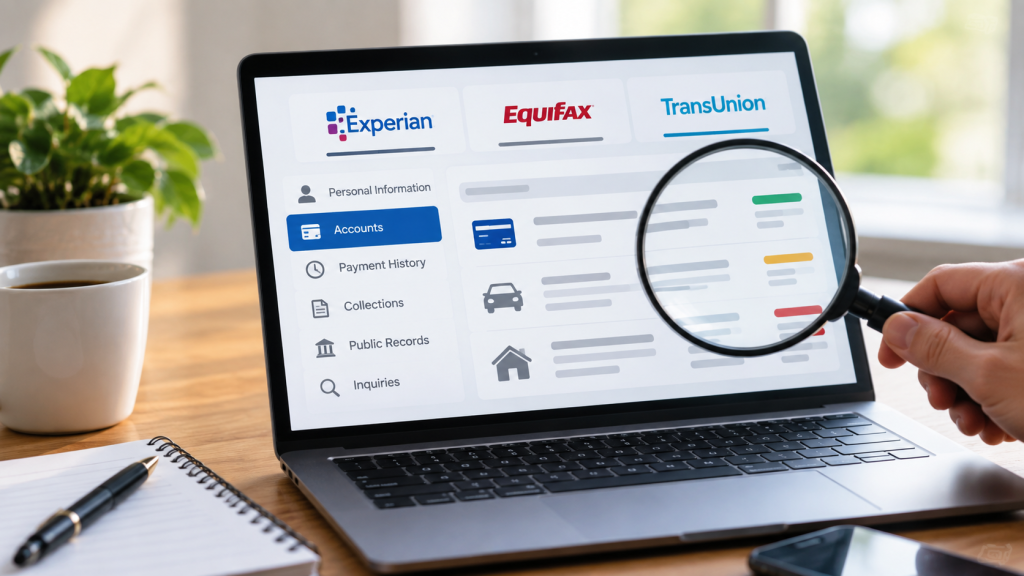
Your credit report is a permanent transcript of how you move through pressure, obligation, and responsibility.
Here’s how they translate it:
- Late payments → You crack under routine responsibility
- Collections → You avoid problems instead of resolving them
- Charge-offs → You abandon commitments when it gets uncomfortable
- Repossessions → Impulse over discipline
- Bankruptcies → Pattern failure, not a one-time mistake
This is why the system feels unfair. Because it is. A person with a 750 score and dirty data looks reckless. A person with a 680 score and clean history looks trustworthy. And trust always wins. You can borrow points. You can’t fake patterns.
That’s the secret nobody tells you: Credit isn’t math. It’s reputation. And once you understand that, you stop asking “How do I raise my score?” You start asking the only question that matters: “What does my data say about me when I’m not in the room?”
How Credit Affects Jobs, Military Clearance, and Promotions
Here’s the part nobody warns you about. Credit doesn’t just decide what you can buy. It decides who trusts you. And once you understand that, a lot of doors suddenly make sense.
Security Clearances = Debt Risk Audits
The government doesn’t look at credit like a bank.They look at it like a liability assessment.
- High debt + missed payments = pressure.
- Pressure = vulnerability.
- Vulnerability = risk.
If you’re buried in debt, late on bills, or dodging collectors, the system assumes one thing: You’re easier to influence, manipulate, or corner.
That’s why people get denied or delayed for:
- Military security clearances
- Intelligence roles
- Government contracts
- Sensitive promotions
Not because they’re “bad people” but because debt makes you predictable under stress.
Why Finance Jobs Quietly Reject You
Banks, lenders, and financial firms rarely say this out loud. But they absolutely ask themselves: “If you can’t manage your own money…why would we trust you with ours?”
Late payments signal poor discipline. Collections signal avoidance. Charge-offs signal broken agreements. In industries built on trust, credit history is your background check. No interview can undo that.
Insurance Companies Treat Credit Like a Criminal Record
This one shocks people. Auto insurance. Home insurance. Even life insurance.
They don’t just price risk based on accidents, they price behavior.
Statistically, people with poor credit:
- File more claims
- Miss payments
- Abandon policies
- Cost more long-term
So they charge you more.
Not because of who you are today, but because of what your credit transcript predicts.
The Truth Nobody Says Out Loud
Credit isn’t about money. It’s about trust under pressure.
Every lender, employer, and institution is asking the same silent question: “When things get tight…does this person still honor commitments?” Your credit report answers that for them, before you ever open your mouth. That’s why fixing credit isn’t cosmetic. It’s reputational. And reputations decide who gets access…and who stays stuck explaining themselves forever.
The Hidden Credit Mistake That Destroys Young Adults
Most people’s credit problems don’t start with irresponsibility, they start with ignorance by design. At 17 or 18, banks hand out credit cards with tiny limits and zero education, knowing exactly what will happen next: the card gets maxed, utilization spikes, the score stalls, and the system quietly labels the person as “high risk.” Even when payments are made on time, low limits keep utilization high, which traps people in the same score range for years. They think they’re doing everything right, but the data says otherwise. This cycle repeats through college, early jobs, and adulthood, creating a generation stuck with “decent” scores that still get denied. The hard truth is this: low limits are a cage, and most people never realize they’re locked inside it.
The Real Way High Credit Limits Are Built (And Why Trade Lines Exist)
High credit limits aren’t handed out because your score looks pretty, they’re granted because your credit report proves you can be trusted with leverage. Lenders care about two things more than anything else: age and limits. How long you’ve managed credit, and how much of it you’ve already been trusted with. That’s why authorized users work, not because of magic, but because they inject seasoned data into a thin file. It’s also why trade lines exist: people are trying to shortcut the one thing the system rewards most, time under responsibility. The problem is, shortcuts don’t teach behavior, and lenders can smell synthetic strength a mile away. Before approving $10K, $25K, or $50K cards, banks look for patterns: low utilization, on-time payments, layered credit types, and proof that you didn’t crumble the moment you were given access. High limits aren’t bought. They’re earned slowly, then multiplied quickly once the data says you’re safe to trust.
The 1% Utilization Rule Almost Nobody Follows
Most people think they’re doing the right thing by paying their credit cards down to zero. Feels responsible. Feels clean. Feels smart. But the credit system doesn’t reward feelings, it rewards behavior patterns. At 30% utilization, you look average. Not risky, not impressive. At 10% utilization, you look disciplined and stable. But at 1% utilization, you look elite, like someone who has access to credit and doesn’t need it. That’s the sweet spot most people never hit. Here’s why: the scoring models don’t want to see cards completely unused. Zero balance often reads as inactive or untested. Carrying a small, controlled balance shows active use, restraint, and consistency. It signals that you can borrow without leaning on credit to survive. That’s why people who “do everything right” still get stuck, they’re playing the game emotionally, not strategically. The system rewards restraint, not avoidance.
When You Should Close a Credit Card (And When You Shouldn’t)
Most people are told “never close a card.” That advice is lazy, and wrong. Prime cards are assets. Keep them. Amex. Chase. Bank of America. These build age, limits, and credibility with real lenders. But predatory cards are traps designed to drain you slowly. First Premier. Credit One. Indigo. Milestone. They charge monthly maintenance fees just to exist, bury you in high interest, and offer zero long-term upside. Even with a $0 balance, they tax you every month and signal subprime behavior to lenders. The rule is simple: keep assets, cut liabilities. Close the cards that bleed you. Protect the cards that elevate you.
Business Credit Isn’t Just “More Credit” — It’s Protection
Personal credit follows you. Your name. Your SSN. Your life. Every mistake hits your report and stays there like a permanent record. Business credit is different. It lives under your EIN, your company’s identity, not your personal one. That separation is the whole game. Most people never learn the difference, so they build businesses that still bleed personal risk. A personal guarantee means the bank is really lending to you and using the business as a costume, miss payments and it snaps back onto your personal credit fast and hard. That’s why Amex business cards are hybrids: they look like business credit, but default and it comes straight back to your personal report as a charge-off. True business credit is when approvals, limits, and reporting stay tied to the business only. If something goes wrong, your personal credit isn’t collateral damage. That’s the difference between building leverage… and building a time bomb.
The Business Credit Stack Nobody Explains
Business credit isn’t magic, it’s a stack, and most people never see the full picture. First, you create a real business identity with an EIN. Not a side hustle. Not a “DBA.” A legit entity the system can recognize. Then you get a DUNS number (it’s free, anyone charging for it is robbing you). That DUNS number is how Dun & Bradstreet tracks your behavior, assigns you a Paydex score (0–100), and decides whether you’re trustworthy. At the same time, your activity feeds into Experian Business and Equifax Business, which lenders quietly check before approving limits, net-30 accounts, or true non–personal guarantee credit. Here’s the part nobody tells you: business credit is easier to fix than personal credit. It’s barely regulated, disputes are faster, corrections are simpler, and negative marks can often be resolved in days, not years. That’s why smart operators shift risk to business credit early. It’s not just leverage. It’s insulation.
Net-30 Accounts — The Foundation of Business Credit
Net-30 simply means this: a vendor gives your business 30 days to pay a bill. No interest. No revolving balance. Just trust. You buy today, you pay within 30 days, and that payment gets reported to business credit bureaus. Vendors like Uline matter because they actually report, most don’t. That’s why they’re used as “starter fuel” for business credit. When you pay those Net-30 accounts early (not late, not on day 30, but early), your Paydex score jumps fast. And here’s the hidden accelerator almost nobody talks about: Nav.com. It monitors your business credit and reports your monthly payment as an on-time trade line, meaning you’re building business credit just by tracking it. That’s leverage. Business credit isn’t built with big moves, it’s built with boring, disciplined payments that signal reliability before you ever ask for real money.
Why Using Your Home Address Can Kill Business Credit Approvals
This is one of the quiet killers nobody warns you about. When lenders, vendors, and banks evaluate a business, they’re not just checking numbers, they’re checking credibility signals. A home address screams “side hustle,” not “stable operation.” PO boxes are even worse, they’re instant red flags that trigger auto-declines. Cell phone numbers don’t help either; they signal impermanence. Real businesses look real: a virtual office address, a true business phone system like RingCentral (not Google Voice), and a verified 411 listing so your company shows up in legitimate directories. These details sound small, but they decide whether your application gets reviewed, or rejected before a human ever sees it. In business credit, perception isn’t cosmetic. It’s approval.
How Credit Is Used to Buy Real Estate With Little to No Cash
Here’s the part nobody teaches you because it breaks the “save for 10 years” narrative. Real estate doesn’t start with cash, it starts with credit leverage. When someone builds $20K–$30K in clean personal credit limits first (not just a high score), they unlock access to business credit cards with much higher limits. Those business cards can legally be used for down payments, earnest money, inspections, rehab, or liquidity padding, as long as they’re structured correctly. After the property is refinanced or stabilized, the credit is paid back down and reused, effectively recycling credit instead of burning cash. This method outperforms student loan leverage because student debt is rigid, slow, and permanent, while credit is flexible, renewable, and adjustable. The real game isn’t owning property, it’s controlling leverage without destroying your balance sheet.
Student Loans — How to Fix Them Without Destroying Your Credit
Student loans don’t ruin people’s credit because they exist, they ruin credit because people don’t know the order of operations. Federal loans give you tools most people never use: consolidation to clean up chaos, Income-Based Repayment (IBR) to legally drop payments to $0 when income is low, and rehabilitation programs to erase defaults after consistent on-time payments. Miss this sequence and you stay trapped; follow it and student loans actually help your credit by adding positive payment history. The key distinction most never learn: federal loans are negotiable systems, private loans are contracts. Federal debt can be reset, re-aged, and brought back into good standing without score destruction. Private loans? Much harder, often brutal. The mistake isn’t having student loans, it’s letting them sit unmanaged while they quietly poison your credit profile.
The Co-Signer Trap That Wrecks Families
Co-signing is sold as love, but it usually ends in resentment. One missed payment doesn’t just hurt credit, it poisons relationships, creates silent anger, and turns family into creditors. Parents co-sign because the system failed their kids early, not because it’s smart. Prepared parents never co-sign, they pre-build. Adding a child as an authorized user at 16 quietly gives them age, limits, and clean history before adulthood even starts. By 18, they don’t need permission, favors, or signatures. Co-signing is damage control. Preparation is power.
Why Credit Is a Generational Weapon (Not a Personal Tool)
Credit isn’t about you, it’s about who comes after you. When kids are added as authorized users at 16, they don’t start life begging banks for permission; they start with leverage. By 18, a 750+ score is normal. No co-signers. No predators. No delays. That early access unlocks real estate before rent traps set in, business funding before wage ceilings hit, and investments before time disappears. This is how families stop restarting every generation. Credit literacy doesn’t just raise scores, it rewrites bloodlines.
The Difference Between Credit Repair and Credit Education
Credit repair fixes yesterday’s mistakes.
Credit education stops tomorrow’s mistakes from ever happening.
Most companies only play defense. They remove late payments, dispute collections, clean reports, and that’s where it ends. That helps, but it doesn’t change behavior. Without education, people fall right back into the same traps that broke their credit in the first place.
Education is offense.
It teaches how credit actually works, how lenders think, how limits are built, how utilization really affects scores, and how credit turns into leverage, not just approval letters. Systems are what separate people who “get their credit fixed” from people who stay powerful.
That’s the real line in the sand. Dispute mills sell hope. Strategy-first companies build control. Repair removes damage. Education builds intelligence. Systems create leverage, for life.
Author Profile

- Michael Harrington is a senior credit analyst and contributor at Credit Repair Dudes, specializing in consumer credit reporting, dispute methodology, and long-term credit profile improvement. With extensive experience analyzing bureau data, lender behavior, and FCRA compliance, Michael focuses on helping consumers understand how credit decisions are actually made, and how to protect and improve their credit responsibly. His work emphasizes accuracy, transparency, and practical strategy over shortcuts or gimmicks.
Latest entries
 Credit EducationFebruary 20, 2026Legal Harbor Review (2026) — Is It Legit or Worth It?
 Credit EducationFebruary 8, 202620 Credit Report Terms Everyone Should Know Before Applying for a Loan
 Credit EducationFebruary 3, 2026What to Do When a Collection Agency Calls You, Step by Step Guide
 Credit EducationJanuary 26, 2026Sky Blue Credit Repair Reviews — In-Depth, Neutral Analysis