Most people look at “Date Opened” or “Last Payment” and assume those dates control how long a negative account stays on their credit report. They don’t. Those dates are informational at best and misleading at worst. The Date of First Delinquency is the only date that legally starts the credit reporting clock. It decides when a collection or charge-off must fall off your report. Everything else is noise. If the DOFD is wrong, the entire timeline is wrong.
What Is Date of First Delinquency (DOFD)?
The Date of First Delinquency is the first month you fell behind on a payment and never fully caught up again. That moment starts the legal countdown for how long a negative account can stay on your credit report. Under federal law, that clock runs for about seven years from this date. Not from when the debt was sold. Not from when a collector showed up. Not from the last payment you made later on.
DOFD is often confused with “last activity” or “date opened,” but those dates do not control reporting limits. DOFD does. It is the anchor that everything else hangs from.
Quick clarity:
- DOFD = the start of the reporting clock
- If DOFD is correct, the timeline is legal
- If DOFD is wrong, the entire report is compromised
Why DOFD Matters More Than Your Credit Score
Your credit score is reactive. It moves based on whatever is sitting on your credit report at that moment. DOFD controls something much more important. It controls how long negative information is legally allowed to exist on that report in the first place.
When the DOFD is correct, the damage has a fixed expiration date. When the DOFD is wrong, the damage lingers longer than the law allows, even if your score looks like the problem. This is why people can pay debts, wait years, and still get denied. The timeline is broken, not their effort.
Under the Fair Credit Reporting Act (FCRA), negative accounts are supposed to fall off after a set period tied directly to DOFD. When that date is misreported or manipulated through re-aging, the entire reporting clock is distorted. That distortion leads to repeated denials and often shows up later as an adverse action notice with vague explanations that never point to the real issue.
This is the core truth most people miss. You do not outscore a bad timeline. You fix the timeline, and the score follows.
The Law That Governs DOFD (FCRA Section 605)
The Fair Credit Reporting Act sets strict limits on how long negative information can stay on a consumer report. Under FCRA Section 605, most negative accounts can be reported for seven years, and that clock is anchored to one date only: the Date of First Delinquency. Once that date is set, it cannot legally be changed. Selling the debt, transferring it to a new collector, making a payment, settling the account, or continued collection activity do not restart the clock. The law is clear because Congress wanted a fixed endpoint for credit damage. When the DOFD is correct, the timeline is enforceable. When it is wrong, the reporting violates the FCRA.
DOFD vs “Date Opened” vs “Date Reported” vs “Last Payment”
This is where most people get misled. Date Opened is simply when the account was first created. It has nothing to do with when the account went bad. Date Reported is the last time the creditor or collector sent an update to the credit bureau. It changes constantly and carries no legal weight. Last Payment is just that, the last time money was sent, and it does not reset how long the account can be reported. Date of Last Activity is often vague, inconsistently used, and frequently abused by collectors to make debt appear newer than it is. DOFD is the only date that matters under the law. It marks the first time you fell behind and never caught up, and it is the single anchor for the seven-year reporting limit.
Remember: Collectors love newer dates. The law only cares about the first delinquency that never got fixed.
How DOFD Gets “Changed” and How Re-Aging Happens
DOFD is not supposed to move, but in the real world it often does, quietly and incorrectly. The most common scenario is when a debt is sold to a new collection agency and the collector reports the account as if it just became delinquent, using a new “opened” or “reported” date instead of the original delinquency. Another frequent trigger is when a consumer makes a payment or settlement and the system updates dates sloppily, causing the delinquency timeline to shift forward even though the account was never brought current. Sometimes an account is deleted and later reinserted with a newer timeline, which is a classic reinsertion problem. In many cases there is no human review at all, automated systems simply “verify” the wrong date and push it through. This is how re-aging happens, and when it continues after notice it can cross into willful noncompliance rather than an innocent error.
Common Accounts Where DOFD Mistakes Show Up
DOFD errors don’t show up evenly across all accounts. They cluster in places where ownership changes hands or servicing gets messy.
Collections are the most common. When debts are sold or placed with new agencies, the original delinquency date often gets replaced with a newer one, even though the law forbids it.
Charge-offs are another hotspot. Banks update balances and statuses correctly, but the delinquency date quietly shifts forward, extending how long the damage stays visible.
Repossessions frequently show incorrect timelines, especially when the vehicle is sold, the balance changes, or the account is transferred after the repo.
Student loans are high risk for DOFD errors when loans move between servicers, exit forbearance, or are consolidated. The original missed payment often gets buried.
Medical collections bounce between billing companies and agencies. Each transfer increases the chance the DOFD is reported wrong.
How to Find DOFD on Your Credit Reports
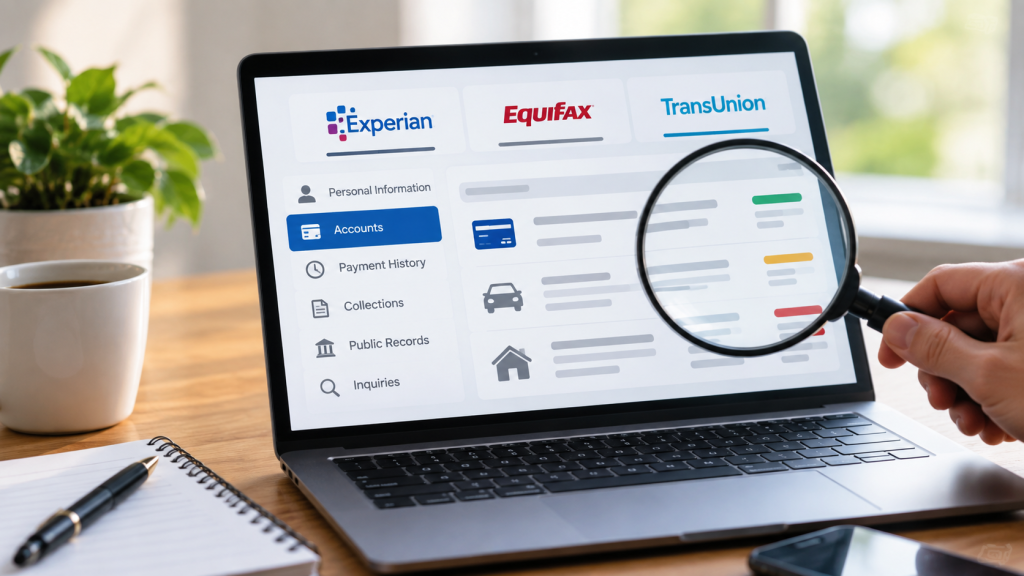
Finding the Date of First Delinquency takes more than skimming a summary page. Each bureau shows it differently, and sometimes they don’t label it clearly at all. On Experian, DOFD may appear as “Date of First Delinquency” or be implied through the account history timeline. On Equifax, it’s often buried in the detailed account status or payment history section. TransUnion may reference it indirectly through “Estimated Month and Year That This Item Will Be Removed.” If you don’t see DOFD plainly listed, that’s a red flag, not proof it doesn’t exist. Bureau summaries and credit monitoring apps often hide or simplify timelines, which is why they’re unreliable for legal review. The only way to confirm DOFD is to pull all three full reports, line up the dates side by side, and match them to when the account first went delinquent and was never brought current again. If the timelines don’t match your real history, that’s where the problem usually starts.
Signs the DOFD Might Be Wrong
If the account shows a recent “date opened” but you know the debt is several years old, that is a red flag. When one credit bureau reports a much newer delinquency timeline than the others, something is off. If the account keeps aging forward even though no new activity has happened, that is another warning sign. And if you keep getting denied over an old debt that should be close to falling off your report, the DOFD may be wrong and extending the damage illegally.
DOFD vs Statute of Limitations (These Are Not the Same)
Date of First Delinquency controls credit reporting, not lawsuits. The statute of limitations controls whether a creditor can legally sue you, not whether an account can appear on your credit report. These two timelines run separately and are often confused on purpose. A debt can be time-barred, meaning it is too old to sue on, and still legally appear on your credit report if the DOFD is within the reporting window. At the same time, a debt can still be reportable but illegally extended if the DOFD is altered or re-aged. This is why understanding both timelines matters. One governs courtrooms. The other governs credit bureaus. Mixing them up is how old debt keeps hurting people longer than the law allows.
How DOFD Errors Are Challenged in Credit Repair
Most DOFD errors survive because people dispute the story instead of the timeline. Generic disputes like “this isn’t mine” or “this is inaccurate” rarely work when the data is technically correct but legally misdated. The strongest challenges focus on timeline legality under the FCRA, not emotion or opinion. What matters is documented consistency across data sources, original creditor records, payment history, and bureau reporting. An account can be accurate in balance and ownership and still be noncompliant if the DOFD is wrong. Credit repair that works doesn’t argue feelings; it forces the clock to follow the law.
What Happens When DOFD Is Corrected
When the Date of First Delinquency is corrected, the entire reporting timeline snaps back to where the law says it belongs. That often means the account moves much closer to its legal fall-off date instead of lingering for extra years. In some cases the bureau corrects the date rather than deleting the account outright, which still reduces how long the damage can affect approvals. When DOFD errors are paired with other violations, like re-aging or improper reinsertion, full deletions become more likely. At every stage, outcomes are decided by documentation and persistence, not arguments or pressure.
What DOFD Means for Consumers
Paying a debt does not legally restart the reporting clock. Settling a debt does not restart it either. Moving the account to a new collector or updating balances does not change it. The Date of First Delinquency is fixed in time, and the law treats it that way. You have the right to have that timeline reported accurately across all bureaus, regardless of who owns the debt or how many times it changes hands. Old debt does not get younger because someone updates a computer screen.
FAQ: Date of First Delinquency (DOFD)
Does making a payment change DOFD?
No. Making a payment does not legally change the Date of First Delinquency. DOFD is fixed to the first time the account went delinquent and was never brought current again. Payments may update balances or statuses, but they cannot reset the reporting clock.
Can a collection agency reset DOFD?
No. A collection agency has no legal authority to reset DOFD. Selling, transferring, or assigning a debt does not create a new delinquency date. Any attempt to do so is considered improper re-aging under the FCRA.
Why do my credit bureaus show different dates?
Because bureaus rely on data furnished by different sources and errors are common. One bureau may display a correct DOFD while another reflects a misreported or re-aged date. This inconsistency is a major red flag and often the strongest basis for a legal dispute.
How long can a charge-off stay on my credit?
Up to 7 years plus 180 days from the DOFD, regardless of whether the account is paid, settled, sold, or transferred. The charge-off does not get a new reporting period because of later activity.
What is the difference between DOFD and last activity?
DOFD controls how long negative information can be reported. “Last activity” is often just a system update or payment date and has no authority over the reporting timeline. Collectors frequently blur this distinction, but the law does not.
Can a reinserted account have a new DOFD?
No. Reinsertion does not create a new DOFD. If an account is deleted and later reinserted, it must retain the original DOFD and the bureau must notify you. A new DOFD on reinsertion is a serious compliance violation.
DOFD Is the Clock, and the Law Protects the Clock
Credit damage is not permanent by default. It has an expiration date, and that expiration is set by one thing only: the Date of First Delinquency. DOFD is the legal start of the reporting clock, not the last payment, not when a collector bought the debt, and not when a computer system updated a field. When DOFD is wrong, time gets stolen from the consumer and the damage lasts longer than the law allows. The Fair Credit Reporting Act exists to stop that from happening. Fix the DOFD, and you stop the system from rewriting your history.
Author Profile

- Michael Harrington is a senior credit analyst and contributor at Credit Repair Dudes, specializing in consumer credit reporting, dispute methodology, and long-term credit profile improvement. With extensive experience analyzing bureau data, lender behavior, and FCRA compliance, Michael focuses on helping consumers understand how credit decisions are actually made, and how to protect and improve their credit responsibly. His work emphasizes accuracy, transparency, and practical strategy over shortcuts or gimmicks.
Latest entries
 Credit EducationFebruary 20, 2026Legal Harbor Review (2026) — Is It Legit or Worth It?
 Credit EducationFebruary 8, 202620 Credit Report Terms Everyone Should Know Before Applying for a Loan
 Credit EducationFebruary 3, 2026What to Do When a Collection Agency Calls You, Step by Step Guide
 Credit EducationJanuary 26, 2026Sky Blue Credit Repair Reviews — In-Depth, Neutral Analysis